Inside an Oman Project: How Real Estate Investment and Regulatory Reform Are Reshaping the Sultanate's Property Market
November 4, 2026By ODBW Feature by Swathi Suresh
Share this article
Oman's real estate market is entering a new phase of development, where investment opportunities are increasingly shaped by regulatory reform, integrated urban planning and the growing participation of international developers. As the Sultanate advances its Oman Vision 2040 objectives, the focus is shifting beyond property construction towards creating commercially sustainable, investment-ready destinations.
For developers, investors and property buyers, understanding this evolving landscape is becoming essential. From integrated tourism complexes and mixed-use developments to new residential communities and sustainable urban districts, Oman's built environment is being reshaped by a combination of policy initiatives, private-sector investment and changing market expectations.
But what does it take to turn an attractive real estate opportunity into a successful development project in Oman? The answer lies in understanding three interconnected factors: regulatory certainty, long-term investment viability and effective project execution.
Regulatory Evolution: Creating a More Investment-Friendly Market Regulatory frameworks play a fundamental role in determining the attractiveness of any real estate market. In Oman, property ownership regulations, foreign investment provisions and government-led urban development initiatives have helped create new pathways for participation in the property sector. One of the most significant developments has been the introduction and expansion of Integrated Tourism Complexes (ITCs), which provide eligible foreign buyers with opportunities to own property within designated developments, subject to applicable regulations.
This framework has supported the development of master-planned communities combining residential properties, hospitality facilities, retail destinations and leisure infrastructure. For international investors, such developments offer an established legal structure for property acquisition. For developers, they create opportunities to attract a broader buyer base and develop projects with diversified revenue streams.
However, investment attractiveness is not determined by ownership rights alone. Clarity around land use, development approvals, construction regulations, infrastructure responsibilities and property management is equally important.
As Oman continues to modernise its urban development landscape, regulatory transparency and predictable approval processes will remain critical to sustaining investor confidence.
From Investment Opportunity to Project Delivery A successful real estate development begins long before construction. Investors and developers must assess market demand, financing conditions, infrastructure availability, regulatory requirements and the long-term commercial viability of a proposed project. In Oman, these considerations are particularly relevant as new developments emerge across Muscat, Duqm and other growth corridors.
The development process typically involves several interconnected stages, from identifying a suitable site and securing land rights to obtaining approvals, structuring financing, appointing contractors and delivering completed properties. For developers entering the Omani market, local partnerships and a clear understanding of the regulatory environment can be especially valuable.
Projects that integrate residential, commercial, hospitality and public amenities may also benefit from diversified demand, although their commercial success depends on location, execution, market absorption and operating costs. This reflects a broader shift in the built environment sector: the value of a development is increasingly measured not only by the properties it delivers, but also by the quality, connectivity and long-term functionality of the community it creates.
The Regulatory Shift: Why 2026 Matters Oman's real estate sector has undergone important legislative changes that could influence how projects are financed, marketed and delivered.
Royal Decree 79/2025 introduced a consolidated law regulating real estate, addressing several areas of the property sector within a unified legal framework. The law entered into force in 2026, with implementation provisions and applicable regulations shaping how its requirements operate in practice.
Further changes to property-linked residency provisions in June 2026 created additional pathways for eligible foreign property owners and buyers to obtain visas or residency without a local sponsor, subject to prescribed conditions These developments are significant, but they do not mean foreign nationals can automatically purchase property anywhere in Oman. Ownership remains subject to applicable location restrictions, eligibility criteria and project-specific approvals.
For investors, the practical priority is therefore due diligence: understanding the ownership structure, verifying title and registration, evaluating off-plan protections and assessing the developer's ability to deliver. Sultan Haitham City provides a relevant example of how Oman is translating long-term urban planning into structured real estate investment opportunities.
Located in Seeb, the development is designed as a new-generation urban community combining residential neighbourhoods, commercial facilities, public amenities, green spaces and smart infrastructure. The master plan, developed by Skidmore, Owings & Merrill (SOM), places emphasis on walkability, mixed-use neighbourhoods and sustainable urban living.
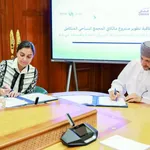
A OMR 320 Million Investment Partnership A particularly significant milestone was the May 2026 announcement of an Omani-Saudi development partnership involving Retal Urban Development Company.
The Ministry of Housing and Urban Planning announced an agreement exceeding OMR 320 million for an integrated residential development within Sultan Haitham City. The project is planned to cover more than 1.3 million square metres and include over 2,000 residential units, together with commercial and community facilities.
The agreement also marks Retal's entry into the Omani market, demonstrating how government-led urban development initiatives can attract regional developers and investment capital. Importantly, the development uses an off-plan sales model, illustrating the connection between regulatory structures, project financing, market demand and delivery.
For investors, this model can create opportunities to participate in developments before completion. However, its success depends on appropriate buyer protections, transparent payment arrangements, project governance and construction delivery.
What the Project Demonstrates Sultan Haitham City offers three important lessons for Oman's real estate sector. First, master planning can strengthen investment confidence. A coordinated approach to land use, infrastructure, mobility and community facilities provides a clearer framework for long-term development. Second, public-private collaboration can unlock large-scale projects. Partnerships between government authorities and experienced developers can bring together land development frameworks, capital, construction expertise and market access. Third, real estate value increasingly depends on liveability. Residential units alone do not create successful communities. Accessibility, green spaces, essential services and economic activity are fundamental to sustaining long-term demand. While the project's ultimate financial and social outcomes will depend on execution, its investment structure provides a useful example of how Oman is positioning major urban developments for private-sector participation.
What Developers and Investors Should Watch Next As Oman's real estate sector evolves, several factors will determine whether new investment opportunities translate into sustainable market growth.
Developers will need to respond to changing buyer expectations, particularly demand for connected communities, energy-efficient buildings and integrated amenities. Investors will increasingly assess project fundamentals beyond initial property prices, including construction costs, financing structures, expected rental demand, operating expenditure and long-term asset performance. Meanwhile, the regulatory environment will remain central to market confidence. Transparent property registration, effective off-plan safeguards and predictable development approvals can reduce uncertainty and support more informed investment decisions. The experience of established integrated developments also provides evidence of the potential economic impact of well-executed projects.
For example, Al Mouj Muscat reported in June 2026 that an independent impact study attributed OMR 878 million in cumulative GDP contribution and OMR 880 million in foreign direct investment and ownership to the development over two decades. These are company-reported study findings, rather than forecasts for newer projects.
Together, established developments such as Al Mouj Muscat and emerging urban projects such as Sultan Haitham City illustrate the range of investment models shaping Oman's property market.
Looking Ahead: From Property Development to Investment Destinations Oman's real estate transformation is increasingly about more than expanding the supply of buildings. It is about creating places where people can live, businesses can grow and investors can participate in long-term economic development.
Regulatory modernisation, master-planned urban projects and international development partnerships are creating a foundation for this transition. Yet the next measure of progress will be implementation: how efficiently projects secure approvals, attract investment, manage construction risks and deliver commercially sustainable communities. As REIDEX 2027, the evolution of Oman Design & Build Week (ODBW), brings together developers, architects, contractors, investors and policymakers, these issues will be central to discussions about the future of Oman's built environment. The next chapter of Oman's real estate growth will not be defined by how many projects are announced, but by how successfully investment opportunities are transformed into completed, thriving communities.
Oman's real estate market is entering a new phase of development, where investment opportunities are increasingly shaped by regulatory reform, integrated urban planning and the growing participation of international developers. As the Sultanate advances its Oman Vision 2040 objectives, the focus is shifting beyond property construction towards creating commercially sustainable, investment-ready destinations. For developers, investors and property buyers, understanding this evolving landscape is becoming essential. From integrated tourism complexes and mixed-use developments to new residential communities and sustainable urban districts, Oman's built environment is being reshaped by a combination of policy initiatives, private-sector investment and changing market expectations.
But what does it take to turn an attractive real estate opportunity into a successful development project in Oman? The answer lies in understanding three interconnected factors: regulatory certainty, long-term investment viability and effective project execution.
Regulatory Evolution: Creating a More Investment-Friendly Market Regulatory frameworks play a fundamental role in determining the attractiveness of any real estate market. In Oman, property ownership regulations, foreign investment provisions and government-led urban development initiatives have helped create new pathways for participation in the property sector. One of the most significant developments has been the introduction and expansion of Integrated Tourism Complexes (ITCs), which provide eligible foreign buyers with opportunities to own property within designated developments, subject to applicable regulations.
This framework has supported the development of master-planned communities combining residential properties, hospitality facilities, retail destinations and leisure infrastructure. For international investors, such developments offer an established legal structure for property acquisition. For developers, they create opportunities to attract a broader buyer base and develop projects with diversified revenue streams.
However, investment attractiveness is not determined by ownership rights alone. Clarity around land use, development approvals, construction regulations, infrastructure responsibilities and property management is equally important.
As Oman continues to modernise its urban development landscape, regulatory transparency and predictable approval processes will remain critical to sustaining investor confidence.
From Investment Opportunity to Project Delivery A successful real estate development begins long before construction. Investors and developers must assess market demand, financing conditions, infrastructure availability, regulatory requirements and the long-term commercial viability of a proposed project. In Oman, these considerations are particularly relevant as new developments emerge across Muscat, Duqm and other growth corridors.
The development process typically involves several interconnected stages, from identifying a suitable site and securing land rights to obtaining approvals, structuring financing, appointing contractors and delivering completed properties. For developers entering the Omani market, local partnerships and a clear understanding of the regulatory environment can be especially valuable.
Projects that integrate residential, commercial, hospitality and public amenities may also benefit from diversified demand, although their commercial success depends on location, execution, market absorption and operating costs. This reflects a broader shift in the built environment sector: the value of a development is increasingly measured not only by the properties it delivers, but also by the quality, connectivity and long-term functionality of the community it creates.
The Regulatory Shift: Why 2026 Matters Oman's real estate sector has undergone important legislative changes that could influence how projects are financed, marketed and delivered.
Royal Decree 79/2025 introduced a consolidated law regulating real estate, addressing several areas of the property sector within a unified legal framework. The law entered into force in 2026, with implementation provisions and applicable regulations shaping how its requirements operate in practice.
Further changes to property-linked residency provisions in June 2026 created additional pathways for eligible foreign property owners and buyers to obtain visas or residency without a local sponsor, subject to prescribed conditions These developments are significant, but they do not mean foreign nationals can automatically purchase property anywhere in Oman. Ownership remains subject to applicable location restrictions, eligibility criteria and project-specific approvals.
For investors, the practical priority is therefore due diligence: understanding the ownership structure, verifying title and registration, evaluating off-plan protections and assessing the developer's ability to deliver. Sultan Haitham City provides a relevant example of how Oman is translating long-term urban planning into structured real estate investment opportunities.
Located in Seeb, the development is designed as a new-generation urban community combining residential neighbourhoods, commercial facilities, public amenities, green spaces and smart infrastructure. The master plan, developed by Skidmore, Owings & Merrill (SOM), places emphasis on walkability, mixed-use neighbourhoods and sustainable urban living.
A OMR 320 Million Investment Partnership A particularly significant milestone was the May 2026 announcement of an Omani-Saudi development partnership involving Retal Urban Development Company. The Ministry of Housing and Urban Planning announced an agreement exceeding OMR 320 million for an integrated residential development within Sultan Haitham City. The project is planned to cover more than 1.3 million square metres and include over 2,000 residential units, together with commercial and community facilities.
The agreement also marks Retal's entry into the Omani market, demonstrating how government-led urban development initiatives can attract regional developers and investment capital. Importantly, the development uses an off-plan sales model, illustrating the connection between regulatory structures, project financing, market demand and delivery.
For investors, this model can create opportunities to participate in developments before completion. However, its success depends on appropriate buyer protections, transparent payment arrangements, project governance and construction delivery.
What the Project Demonstrates Sultan Haitham City offers three important lessons for Oman's real estate sector. First, master planning can strengthen investment confidence. A coordinated approach to land use, infrastructure, mobility and community facilities provides a clearer framework for long-term development. Second, public-private collaboration can unlock large-scale projects. Partnerships between government authorities and experienced developers can bring together land development frameworks, capital, construction expertise and market access. Third, real estate value increasingly depends on liveability. Residential units alone do not create successful communities. Accessibility, green spaces, essential services and economic activity are fundamental to sustaining long-term demand. While the project's ultimate financial and social outcomes will depend on execution, its investment structure provides a useful example of how Oman is positioning major urban developments for private-sector participation.
What Developers and Investors Should Watch Next As Oman's real estate sector evolves, several factors will determine whether new investment opportunities translate into sustainable market growth.
Developers will need to respond to changing buyer expectations, particularly demand for connected communities, energy-efficient buildings and integrated amenities.
Investors will increasingly assess project fundamentals beyond initial property prices, including construction costs, financing structures, expected rental demand, operating expenditure and long-term asset performance. Meanwhile, the regulatory environment will remain central to market confidence. Transparent property registration, effective off-plan safeguards and predictable development approvals can reduce uncertainty and support more informed investment decisions. The experience of established integrated developments also provides evidence of the potential economic impact of well-executed projects.
For example, Al Mouj Muscat reported in June 2026 that an independent impact study attributed OMR 878 million in cumulative GDP contribution and OMR 880 million in foreign direct investment and ownership to the development over two decades. These are company-reported study findings, rather than forecasts for newer projects.
Together, established developments such as Al Mouj Muscat and emerging urban projects such as Sultan Haitham City illustrate the range of investment models shaping Oman's property market.
Looking Ahead: From Property Development to Investment Destinations Oman's real estate transformation is increasingly about more than expanding the supply of buildings. It is about creating places where people can live, businesses can grow and investors can participate in long-term economic development.
Regulatory modernisation, master-planned urban projects and international development partnerships are creating a foundation for this transition.
Yet the next measure of progress will be implementation: how efficiently projects secure approvals, attract investment, manage construction risks and deliver commercially sustainable communities.
As ODBW 2027, brings together developers, architects, contractors, investors and policymakers, these issues will be central to discussions about the future of Oman's built environment. The next chapter of Oman's real estate growth will not be defined by how many projects are announced, but by how successfully investment opportunities are transformed into completed, thriving communities.