Loading...
As Oman accelerates urban development under Vision 2040, digital technologies are redefining how buildings are designed, projects are delivered and cities are managed. The next competitive advantage for the Sultanate's construction and real estate sectors may lie not only in what gets built, but in how intelligently it is planned, delivered and operated.
Oman's built environment is entering a new phase of transformation.
From integrated urban developments and smart infrastructure to expanding residential communities and commercial destinations, the Sultanate's construction and real estate landscape is evolving in both scale and complexity.
But as Oman looks towards 2027, the industry's next transformation may be less visible than the buildings themselves.
It is taking place through data, digital modelling, connected infrastructure and intelligent systems that are changing how developments move from concept to construction and, ultimately, long-term operation.
Property Technology (PropTech), Building Information Modelling (BIM) and digital twins are increasingly relevant to this transformation, offering developers, architects, engineers, contractors and asset owners new opportunities to improve efficiency, manage risk and create greater long-term value.
For Oman, these technologies represent more than an industry trend. They offer practical tools to support the Sultanate's ambitions for sustainable urban development, economic diversification and smarter infrastructure under Oman Vision 2040.
The scale of Oman's construction activity highlights the importance of improving how projects are planned and delivered.
According to the National Centre for Statistics and Information (NCSI), Oman issued 40,340 building permits in 2025, representing a 10.5% increase compared with the previous year.
The value of real estate transactions reached approximately OMR 3.368 billion during the same period, while construction completion certificates increased by 3.1%.
These figures point to continued development activity across the Sultanate. They also raise an important question: how can Oman translate growing construction activity into better project outcomes, stronger investment performance and more sustainable buildings?
Traditional construction workflows often involve fragmented information, repeated design revisions, coordination challenges and limited visibility across project stages.
As developments become more complex, these inefficiencies can increase costs, delay delivery and affect long-term asset performance.
Digital technologies offer an opportunity to address these challenges by connecting information, improving collaboration and supporting better-informed decisions throughout the development lifecycle.
PropTech is transforming real estate from a largely transaction-driven industry into one increasingly supported by digital intelligence.
Its applications extend across property discovery, investment analysis, development planning, sales, leasing, facilities management and customer experience.
For developers, digital platforms can improve market visibility and provide more accessible information about property portfolios and development opportunities.
For investors and buyers, interactive property visualisations, virtual tours and data-driven market insights can support more informed decisions.
For asset owners, smart building technologies can help monitor occupancy, energy consumption, maintenance requirements and operational costs.
In Oman, these applications are particularly relevant as the country expands integrated urban communities, mixed-use developments and investment-oriented real estate projects.
The Ministry of Housing and Urban Planning has placed digital transformation and real estate technologies among the strategic themes shaping discussions on the future of Oman's property and urban development sectors.
The opportunity is to move beyond digitalising individual transactions towards creating a more connected real estate ecosystem.
One where information flows more effectively between developers, investors, government authorities, contractors and property owners.
Building Information Modelling represents one of the most significant opportunities to improve efficiency across Oman's construction industry.
Unlike conventional two-dimensional drawings, BIM enables architects, engineers and contractors to work with coordinated digital representations containing information about a building's physical and functional characteristics.
These models can incorporate structural elements, mechanical and electrical systems, materials, construction sequences and cost-related information.
The value lies not simply in creating a three-dimensional model, but in improving coordination and decision-making before construction begins.
For example, potential conflicts between structural components and mechanical systems can be identified during the design stage rather than discovered on-site, where corrections may be more expensive and disruptive.
BIM can also support construction sequencing, quantity estimation, procurement planning and better coordination between contractors and consultants.
For Oman, where major developments must balance delivery timelines, resource efficiency and long-term infrastructure performance, these capabilities could become increasingly important.
The introduction of Oman's 2025 Building Code framework, which establishes coordinated requirements for building design, construction, safety and performance, also reinforces the importance of consistent technical standards across the industry.
If BIM improves how buildings are designed and constructed, digital twins can extend that intelligence into the operational life of an asset.
A digital twin is a virtual representation of a physical building, infrastructure system or urban environment that can be updated using information from the real world.
When connected to reliable operational data, digital twins can help monitor building performance, identify maintenance requirements, simulate scenarios and improve resource utilisation.
For example, a digital twin of a commercial building could support the analysis of energy consumption, cooling efficiency and equipment performance.
At an urban scale, digital twins could assist planners in understanding infrastructure demand, mobility patterns, environmental conditions and the interaction between different city systems.
This is particularly relevant to Oman's ambitions to develop smarter, more sustainable urban environments.
Sultan Haitham City: A case for digitally enabled urban development
Sultan Haitham City offers a prominent example of how digital technology is becoming part of Oman's urban development agenda.
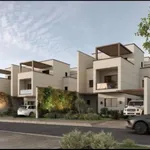
The development, located west of Muscat, is planned across approximately 14.8 square kilometres, with 20,000 residential units and an eventual population of around 100,000 residents.
Its master plan incorporates walkable neighbourhoods, green spaces, mixed-use communities and smart infrastructure designed to improve long-term liveability.
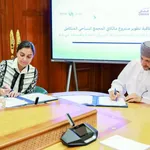
omanIn September 2025, a partnership between Slovakia-based PropTech company WooW Studio and Omani GIS specialist Northsys was awarded a contract by the Ministry of Housing and Urban Planning to develop a digital twin for Sultan Haitham City.
The project demonstrates a practical application of digital urban modelling within Oman's emerging smart city landscape.
Oman ObserverImportantly, a digital twin is not simply an architectural visualisation. Its long-term value depends on the quality of the data it contains, the systems it connects and how effectively that information supports real-world decisions.
For Oman, the potential extends to improving urban planning, infrastructure coordination, sustainability monitoring and communication between stakeholders.
Digital transformation and sustainable construction are closely connected.
Buildings consume resources throughout their lifecycle, from the materials used during construction to the energy required for cooling, lighting, maintenance and daily operations.
Decisions made during the design stage can influence environmental performance for decades.
BIM-based analysis can help project teams compare design options, evaluate material requirements and assess building performance before construction.
Digital twins can then support ongoing monitoring and optimisation after a building becomes operational.
In Oman's climate, cooling efficiency, building orientation, shading, insulation and water management are particularly important considerations.
Digital tools can support more informed decisions in these areas, potentially reducing unnecessary resource consumption and improving long-term operating performance.
However, technology alone does not guarantee sustainability.
Its effectiveness depends on accurate data, appropriate design standards, skilled professionals and the willingness of organisations to use digital insights to inform practical decisions.
The greatest value comes when digital tools are integrated into measurable sustainability objectives rather than treated as standalone technology investments.
While the potential of PropTech, BIM and digital twins is significant, widespread adoption across Oman's built environment will require more than investment in software.
The industry must address several practical challenges, including fragmented project information, interoperability between digital platforms, technology costs and the availability of specialised skills.
For smaller contractors and consultants, the initial cost of implementation and workforce training can be a barrier.
Larger developers may face a different challenge: integrating information across multiple contractors, consultants, systems and project phases.
The international ISO 19650 framework provides principles for managing information across the lifecycle of built assets, offering a reference point for organisations seeking more consistent digital collaboration.
For Oman, progress towards wider digital adoption could be supported by clearer project information requirements, common data environments, targeted professional development and stronger collaboration between public authorities and the private sector.
This also creates opportunities for Omani technology companies, engineering professionals and digital specialists to participate in the transformation of the construction and real estate industries.
Oman's National Programme for Digital Economy identifies the period from 2026 to 2030 as a phase focused on digitalising key economic sectors. This provides a broader policy context for advancing digital capabilities within the built environment.
As Oman moves towards 2027, the discussion must evolve from what digital technologies can do to how they can deliver measurable value.
Five priorities stand out for the built environment sector.
1. Digital integration from the earliest project stages. Developers should consider digital information requirements during planning and procurement, rather than introducing them after design and construction decisions have already been made.
2. Stronger collaboration across the construction value chain. Architects, engineers, contractors, technology providers and asset owners need coordinated information systems that reduce duplication and improve accountability.
3. Lifecycle performance over initial construction cost. Project evaluation should increasingly consider long-term energy consumption, maintenance, operational efficiency and asset resilience alongside upfront investment.
4. Digital skills and local expertise. Building a digitally capable workforce will be essential to translating new technologies into sustained improvements across Oman's construction sector.
5. Measurable returns on digital investment. Developers and contractors should evaluate technology adoption against practical indicators such as design coordination, rework, project delivery timelines, energy performance and operational expenditure.
These priorities can help ensure that digital transformation delivers tangible economic and environmental benefits rather than becoming an additional layer of project complexity.
The future of Oman's built environment will be shaped by more than architectural ambition or the number of developments delivered.
It will depend on how effectively the industry connects design intelligence, construction efficiency, investment performance and long-term sustainability.
PropTech can make real estate markets more accessible and data-driven. BIM can improve coordination and reduce avoidable inefficiencies during project delivery. Digital twins can extend those capabilities into the management and optimisation of completed assets.
Together, these technologies offer a pathway towards a more connected, competitive and sustainable built environment.
As Oman advances its urban development ambitions under Vision 2040, the opportunity is to ensure that digital innovation becomes an integral part of how the country plans, builds and manages its future cities.
The next generation of Oman's built environment will not simply be defined by what is constructed, but by the intelligence embedded in how it is designed, delivered and managed.
ISO 19650-1:2018 - Organization and digitization of information about buildings and civil engineering works, including building information modelling (BIM) — Information management using building information modelling — Part 1: Concepts and principles
National Digital Economy Program | MTCIT
Slovak proptech firm wins Sultan Haitham City digital twin contract