Loading...

One important opportunity for ODBW 2027 is to consider how Oman can build a deeper institutional real estate investment market.
Oman has traditionally had a strong culture of direct property ownership, supported by private investors, family businesses and developers. As the market matures, there is an opportunity to complement this with greater participation from institutional investors, investment funds, REITs, family offices, pension-related capital and international investors.
This is not simply about attracting more capital. It is about creating a larger pipeline of investment-ready, income-producing assets with appropriate governance, transparency, operating performance and scale.
A stronger institutional market can provide developers with additional exit and funding options while creating a wider range of investment opportunities across offices, logistics, hospitality, residential, healthcare, education and other income-producing real estate sectors.
Why does this challenge need to be addressed now, and what happens to the market if it isn’t?
The timing is particularly relevant as Oman continues to diversify its economy, expand tourism, strengthen logistics and industrial activity, develop new urban destinations and attract international investment.
As more projects are delivered, the market will increasingly need long-term capital capable of acquiring, holding and professionally managing completed assets. Institutional investment can help create this next layer of market liquidity.
Without a broader institutional investor base, developers may remain more dependent on individual unit sales, private capital or traditional bank financing. This can limit exit options for large-scale income-generating assets and may constrain the recycling of capital into new developments.
Developing the institutional market can therefore support liquidity, professional asset management, stronger governance and more sustainable long-term investment.
Which stakeholders – developers, investors, regulators, advisors or lenders – hold the key to solving it, and what would you like each of them to do differently?
Creating a stronger institutional market requires coordinated action across the real estate and financial ecosystem.
• Developers – consider institutional investment requirements from the early stages of project planning. This includes appropriate asset scale, efficient design, sustainable operating costs, strong tenant or operator structures, reliable income and professional documentation.
• Institutional investors and fund managers – continue expanding their assessment of Oman across a broader range of real estate sectors and work with developers to define the characteristics required for institutional-grade assets.
• Advisors, valuers and asset managers – support the market through credible valuations as per RICS & IVS, independent due diligence, market benchmarking and professional asset-management practices.
• Regulators and government entities – continue supporting clear investment frameworks, efficient transaction processes and investment structures that can facilitate domestic and international participation.
• Lenders and financial institutions – develop financing solutions that support both development and the longer-term ownership of stabilised income-producing assets.
Can you point to a market, project or policy, in Oman or elsewhere, that has handled this challenge well and offers a useful model?
cross the GCC, the growth of listed and private real estate investment vehicles has demonstrated how institutional capital can complement traditional development and direct property ownership.
Regional markets have increasingly created investable portfolios across logistics, offices, retail, hospitality, education, healthcare and residential assets. The common characteristics are typically stable income, professional management, strong governance, credible valuation and clear investor reporting.
Oman already has important foundations for this evolution, including its capital market framework, real estate investment funds and an expanding stock of modern income-producing assets.
The opportunity is to build on these foundations and progressively increase the volume, diversity and liquidity of institutional-quality real estate investment products suited to Oman’s own market characteristics.
What would a successful conversation on this topic at REIDEX 2027 look like, and what should delegates take away from the room?
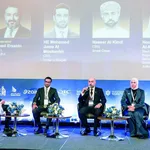
A successful REIDEX discussion would bring together developers, institutional investors, fund managers, regulators, banks, valuers and asset managers to identify what is required to make more Omani real estate genuinely investment-ready.
The conversation should address practical questions: What asset classes are institutional investors seeking? What minimum scale and income profile are required? How should assets be structured and managed? What information and governance standards do investors expect? And how can developers plan an institutional exit strategy from the beginning rather than only after completion?
Delegates should leave with the understanding that institutional investment is not a replacement for private property ownership or traditional development finance. It is an additional layer of capital that can strengthen the overall market.
If Oman continues to build a pipeline of transparent, professionally managed and income-producing assets, it can broaden its investor base, improve market liquidity and position real estate as an increasingly attractive long-term investment proposition for domestic, GCC and international capital.